

California homeowners interested in replacing an aging furnace or air conditioner are hearing a lot about heat pumps, electrification, rebates, and energy-efficiency incentives in 2026. Some of the headlines advertise rebates worth thousands of dollars, including California’s Home Electrification and Appliance Rebates program, better known as HEEHRA.
The opportunity is real, but homeowners need to understand an important detail before planning a project around those savings. California’s HEEHRA program has offered income-qualified single-family households rebates of up to $8,000 toward qualifying heat-pump HVAC installations. However, single-family HEEHRA funding is currently fully reserved statewide, and new income-verification applications are closed. Some projects may remain on a waitlist in case additional funding becomes available.
That does not mean California homeowners should abandon energy upgrades. Heat pumps continue to play an increasingly important role in California homes, and additional utility, local, regional, financing, and future state incentives may be available depending on where you live. The smartest approach in 2026 is to understand how HEEHRA works, check current funding before signing a contract, compare available incentives, and make sure an upgrade makes sense even without assuming a rebate will arrive.
If you are researching HVAC contractors, electricians, energy professionals, or other home services, you can also browse our California homeowner directory before requesting estimates.
How California Heat Pump Rebates Work in 2026
A heat pump is an electric system that transfers heat rather than creating it through combustion. In cooling mode, it operates much like an air conditioner by moving heat from inside the house outdoors. During colder weather, the process reverses, allowing the same system to provide heating.
This ability to provide both heating and cooling is one reason heat pumps have become a major part of California’s home-electrification strategy. They can replace separate gas furnaces and air-conditioning equipment in many homes while providing efficient year-round climate control.
The California Energy Commission administers federally funded residential energy rebate programs created under the Inflation Reduction Act. HEEHRA Phase I includes assistance for income-qualified households installing eligible equipment, with California using TECH Clean California and specially trained contractors to implement the program.
HEEHRA can provide up to $8,000, but single-family funds are reserved

Under the single-family HEEHRA structure, household income determines the potential heat-pump HVAC rebate. California households earning less than 80% of their area’s median income may qualify for a rebate of up to $8,000. Households earning between 80% and 150% of area median income may qualify for up to $4,000.
Eligibility involves more than household income. The property must meet program requirements, the equipment must qualify, and installation must be completed through a HEEHRA-trained contractor participating in TECH Clean California. For the current phase, eligible single-family projects generally involve replacing a non-heat-pump source of space heating with qualifying heat-pump equipment.
The most important 2026 issue is funding availability. Single-family HEEHRA rebates became fully reserved statewide on February 24, 2026. New single-family income-verification applications are no longer being accepted. Some reservation requests can be placed on a waitlist in case funding becomes available, but homeowners should never treat waitlist status as guaranteed funding.
Do not install equipment before an approved reservation
This rule can make the difference between receiving a rebate and receiving nothing. A homeowner on the HEEHRA waitlist must have an approved reservation before installing the heat pump. Installing equipment first and hoping the program later releases money does not create retroactive eligibility.
If a contractor tells you that a project will definitely qualify for HEEHRA, ask to see the approved reservation documentation before work begins. Do not rely solely on an estimate showing a projected rebate deduction.
Homeowners with existing approved reservations should also pay close attention to completion and documentation deadlines. HEEHRA projects generally need to be completed, invoiced, and submitted with required claim documentation within the program’s specified timeframe following reservation approval.
Use current information, not an old rebate advertisement
Energy incentives can change much faster than a typical home improvement article. A rebate flyer, social-media post, contractor webpage, or search result from 2024 or 2025 may describe funding that is now exhausted.
Before purchasing equipment, check the current California Energy Commission program information and verify availability through the program administrator. You can review the official California Energy Commission residential energy rebate program for the latest statewide information.
You should also ask prospective contractors to separate guaranteed incentives from conditional or waitlisted incentives on written estimates. That makes it much easier to calculate what the project will actually cost if a rebate is unavailable.
Other California incentives may still reduce your project cost
HEEHRA is not the only energy program California homeowners may encounter. Depending on your electric utility, community choice aggregator, city, county, equipment type, household income, and project location, other rebates or financing programs may exist.
Availability varies significantly by location, and funding can become fully subscribed. Instead of assuming a statewide advertisement applies to your property, search using your actual ZIP code, utility provider, and proposed equipment.
Some incentives focus specifically on replacing gas space heating with efficient electric heat pumps. Others may support heat-pump water heaters, electrical improvements, multifamily properties, income-qualified households, or broader energy-efficiency projects.
Check incentives before choosing the equipment
Homeowners sometimes select an HVAC system first and look for rebates afterward. Reverse that process whenever possible.
Start by determining which incentives are currently funded. Then review their equipment standards, contractor requirements, reservation rules, income qualifications, and installation deadlines. Only after that should you compare specific models.
For example, HEEHRA requires qualifying equipment and participating contractors. California also notes that beginning in 2026, eligible residential and light-commercial air-conditioning and heat-pump equipment must comply with applicable refrigerant requirements, including limits involving global-warming potential.
Equipment selection should still be based primarily on your home’s needs. An oversized heat pump can cycle inefficiently, create comfort problems, and cost more than necessary. A qualified contractor should evaluate factors such as square footage, insulation, windows, ductwork, climate zone, air leakage, and existing electrical capacity instead of simply replacing an old unit with one of the same nominal size.
How to Plan a Heat Pump Upgrade Without Overpaying
Rebates can improve the economics of a project, but they should not replace proper planning. A heat-pump installation may involve more than swapping one outdoor unit for another. Older California homes can require duct improvements, electrical work, panel upgrades, thermostat changes, refrigerant-line modifications, or changes to equipment locations.
Before requesting quotes, gather information about your current heating and cooling equipment. Note the age of the furnace and air conditioner, equipment model numbers, recent repair history, utility costs, electrical-panel capacity, and rooms that are consistently too hot or too cold.
This information helps contractors understand whether you need a straightforward replacement or a more comprehensive comfort upgrade.
A practical California heat pump checklist for homeowners
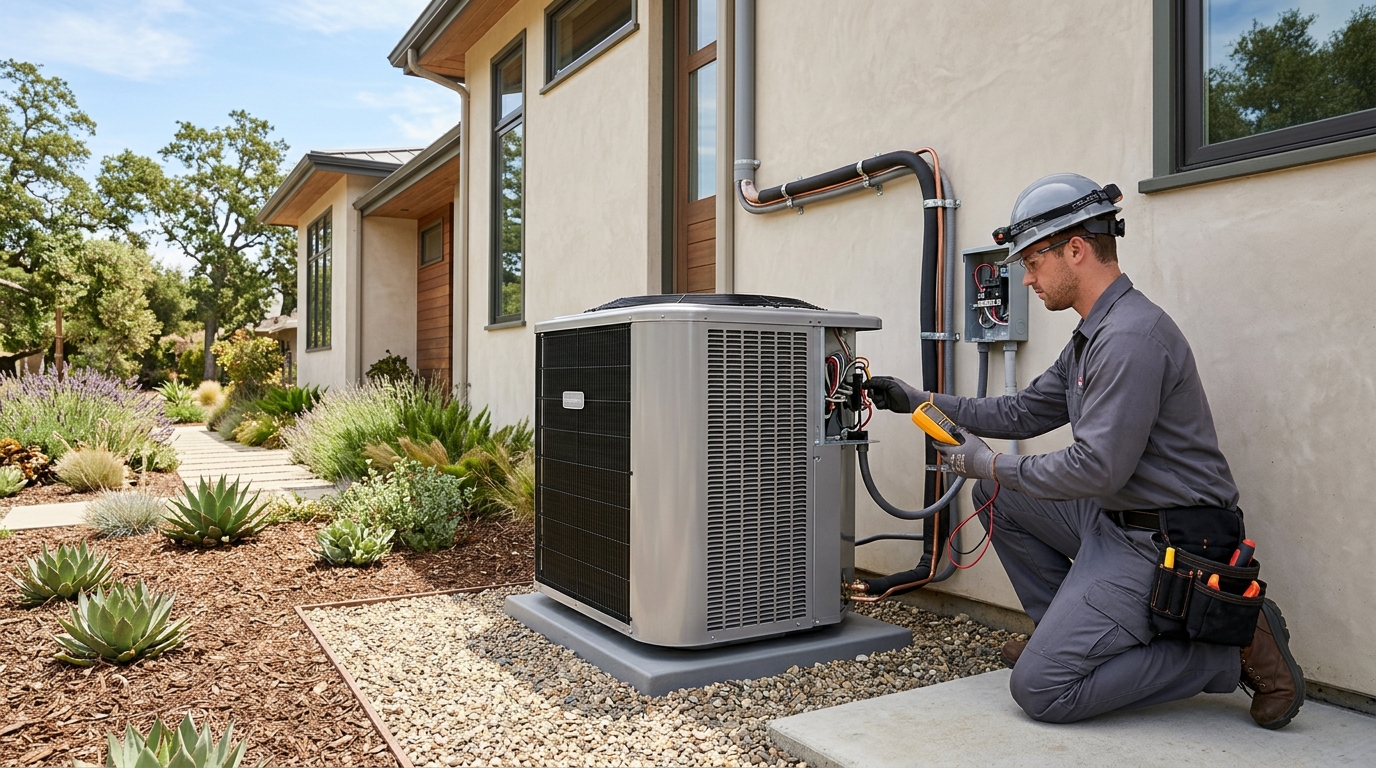
Request estimates from more than one qualified contractor and insist that each proposal clearly identify the equipment model, capacity, efficiency ratings, scope of electrical work, duct modifications, permits, labor, warranties, incentive assumptions, and total price before incentives.
Compare the total project rather than simply choosing the contractor advertising the largest rebate. If one proposal costs $18,000 and promises an $8,000 rebate that is not currently approved, your actual financial exposure may still be $18,000.
Ask whether the contractor performed a load calculation or other appropriate sizing analysis. Proper sizing matters in California because coastal, inland, desert, mountain, and Northern California climates create very different heating and cooling requirements.
Consider electrical capacity and the rest of your home
Electrifying one appliance can affect future home-improvement plans. If you expect to add an electric vehicle charger, induction range, heat-pump water heater, solar system, battery storage, or accessory dwelling unit, discuss those plans with your electrician before automatically upgrading the electrical panel.
In some homes, load management or careful equipment selection may reduce the need for an expensive service upgrade. In others, an electrical upgrade may be the sensible long-term investment. The correct approach depends on the existing service capacity and the loads you plan to add.
Homeowners completing substantial upgrades should also review their property records and insurance coverage. Major HVAC, electrical, solar, ADU, or remodeling projects may change the information your insurer should have about the property. Our California home insurance guide for 2026 covers several important insurance considerations for homeowners making property improvements.
Once installation is complete, save permits, invoices, model and serial numbers, warranty documentation, rebate paperwork, contractor information, and photographs of the finished equipment. Keeping an organized digital property file can make future maintenance, warranty work, home sales, and insurance documentation easier.
Heat pump
It is also worth learning how to operate the system properly. Heat pumps often work most efficiently when maintaining relatively consistent indoor temperatures rather than repeatedly making large temperature changes. Ask the installer to explain thermostat settings, filter maintenance, outdoor-unit clearance, backup heat controls, and recommended service intervals.
California homeowners should view energy incentives as an opportunity rather than a guarantee. HEEHRA has demonstrated how significant the savings can be for qualifying households, with potential rebates reaching $8,000 for eligible heat-pump HVAC projects. But as of 2026, single-family HEEHRA funding is fully reserved statewide, which makes checking current program status essential before committing to a project.
If additional funding becomes available, homeowners who understand the requirements and work with qualified contractors will be better positioned to act. In the meantime, compare other incentives available in your area, obtain multiple detailed bids, select equipment based on your home’s actual heating and cooling needs, and calculate whether the project remains financially reasonable without an unapproved rebate.
For more California property improvement resources, visit our homeowner Articles or explore the Directory when researching local HVAC, electrical, remodeling, and energy professionals.