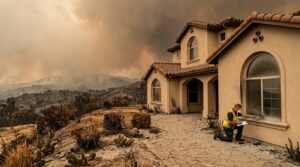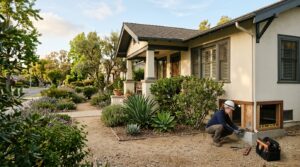
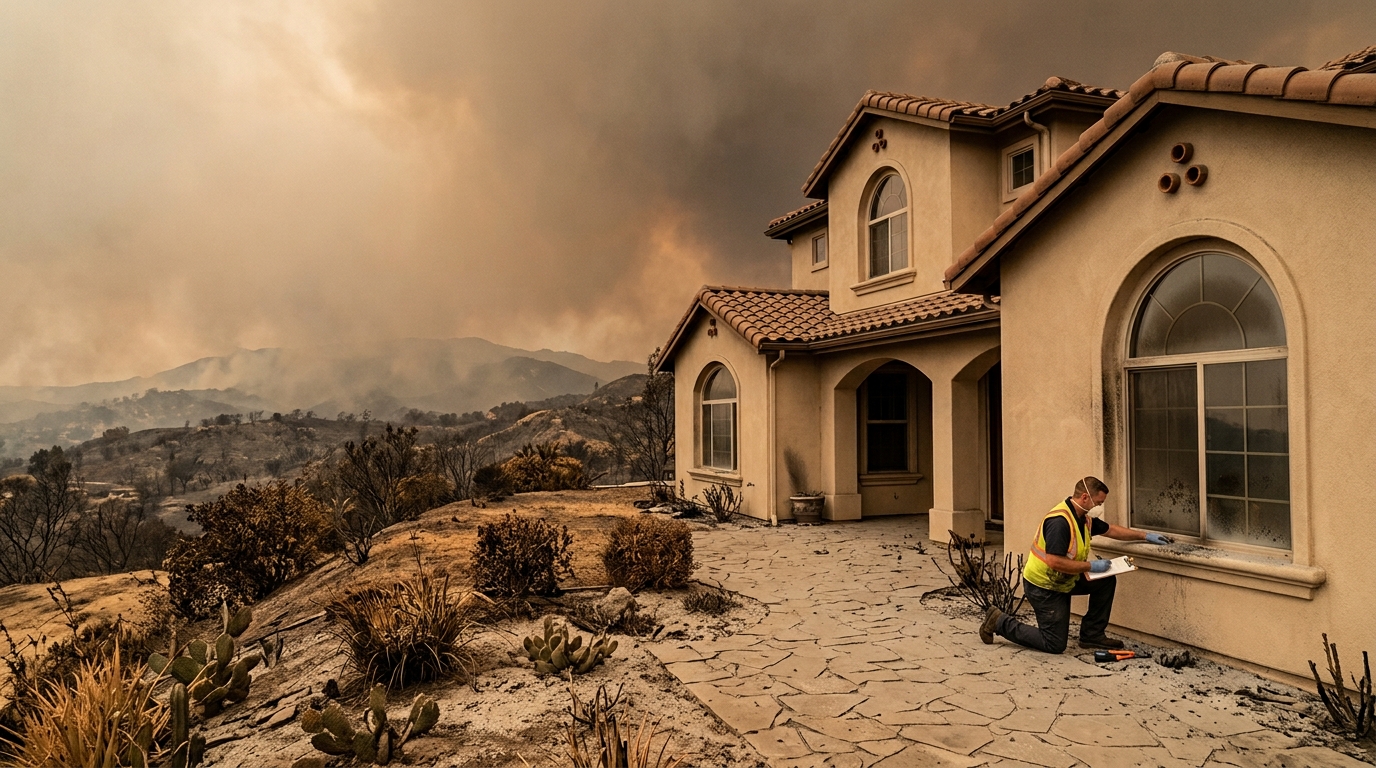
A California home does not have to burn down to suffer serious wildfire damage. Smoke, soot, ash, and combustion residue can enter houses miles from active flames, affecting walls, attics, insulation, HVAC systems, furniture, carpeting, electronics, and other parts of a property that may appear intact from the street.
For homeowners, these claims can be complicated because smoke damage is not always as visible as fire or water damage. Questions can arise about what should be tested, whether cleaning is enough, which contaminants are present, whether the home is safe to occupy, and how much an insurance company should pay to restore the property.
Those issues have become a major focus in California following the 2025 Los Angeles wildfires. The California Department of Insurance reported that more than 13,000 claims from those fires involved standing homes with smoke damage. In response, state officials formed a Smoke Claims and Remediation Task Force and introduced legislation intended to create consistent statewide standards.
In September 2026, the California Legislature passed AB 1795, the Smoke Damage Recovery Act. The measure was sent forward for consideration by the Governor. If signed and implemented, it would establish significant new rules involving smoke testing, insurer inspections, restoration standards, additional living expenses, repair estimates, and contractor choice.
Homeowners dealing with wildfire exposure should understand both the protections that already exist and what the proposed 2026 framework could change. For broader coverage issues, see our California home insurance guide for 2026, or browse our California homeowner directory when researching restoration, HVAC, cleaning, construction, and other home professionals.
How Wildfire Smoke Damage Insurance Claims Work in California
Smoke damage can be more complex than a visible layer of ash on a windowsill. Wildfires involving houses, vehicles, plastics, treated lumber, electronics, household chemicals, and other manufactured materials may produce a mixture of particles and combustion byproducts. What reaches a particular house depends on the fire, wind direction, distance, building construction, ventilation, and other conditions.
This is why homeowners should avoid assuming that a home is undamaged simply because the structure did not burn. At the same time, the presence of wildfire smoke near a property does not automatically establish the type or extent of physical damage inside every house. A claim needs to be documented and investigated according to the circumstances of the property.
California insurers must properly investigate smoke claims
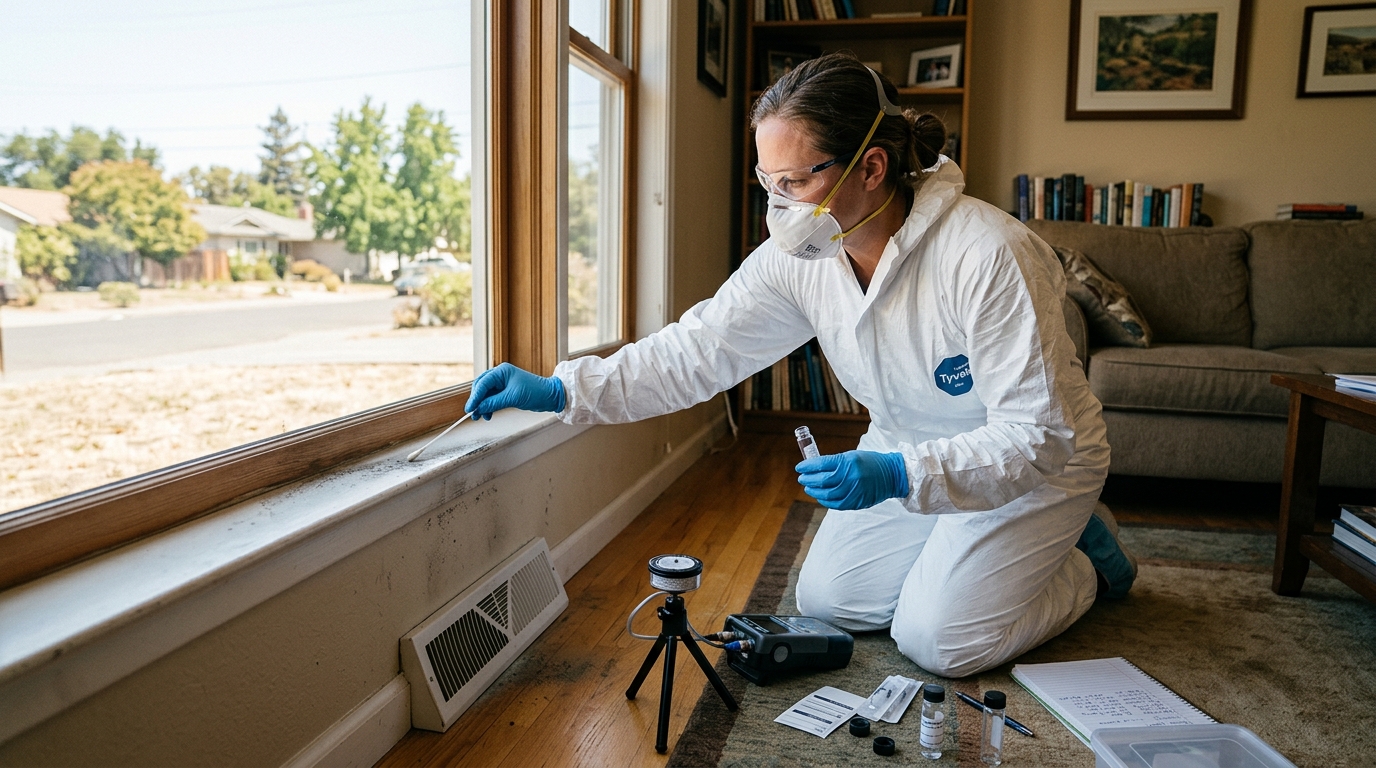
The California Department of Insurance has already made clear that insurance companies cannot simply reject a wildfire smoke claim without an appropriate investigation. Following the Southern California fires, the Department directed insurers to fully investigate smoke-damage claims and make fair payments when losses are covered under the policy.
That distinction is important. The new Smoke Damage Recovery Act is intended to add much more detailed standards, but homeowners do not need to wait for future legislation before reporting legitimate smoke damage under an existing policy.
A standing home can still have a legitimate smoke-damage claim
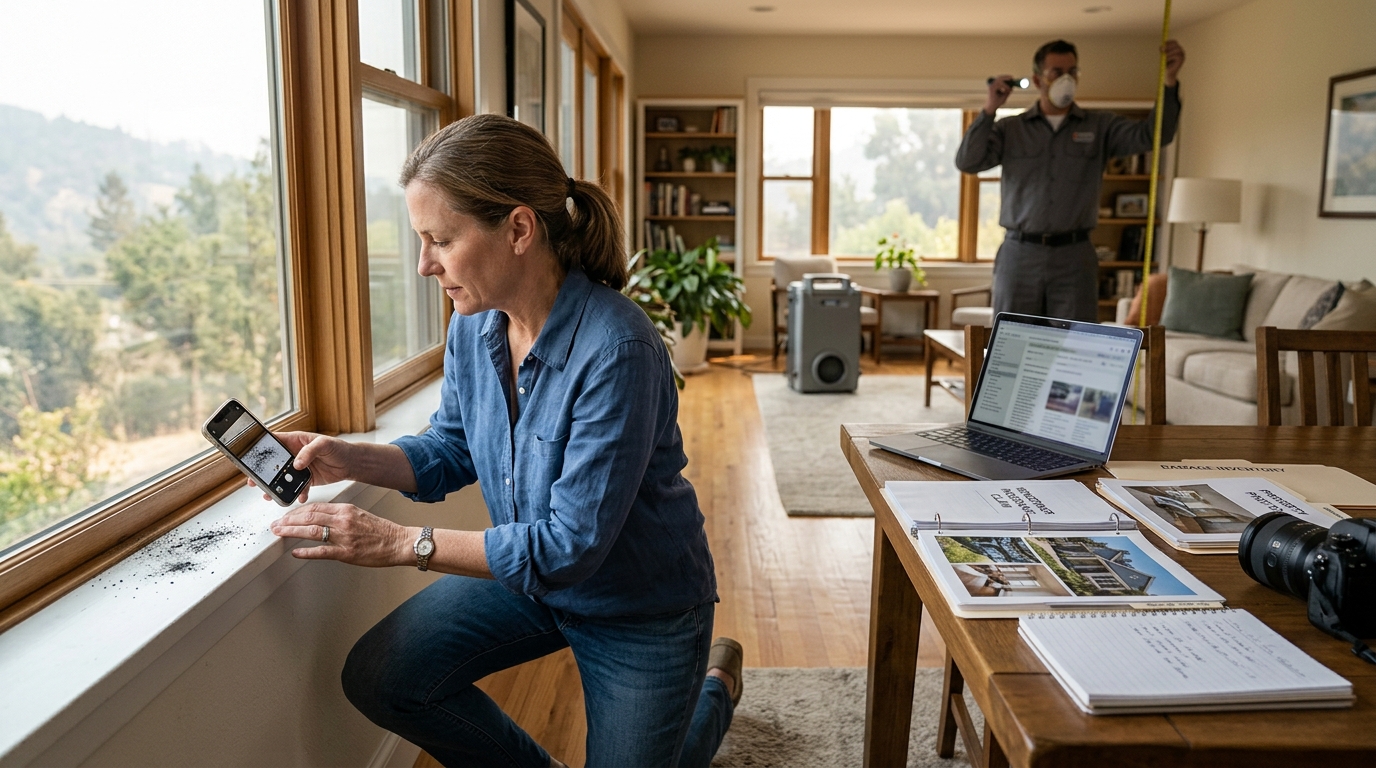
If your house remained standing after a nearby wildfire, document anything unusual as soon as it is safe to return. Look for soot or ash deposits, unusual odors, residue around windows and doors, contamination around vents, discoloration, HVAC-filter changes, damaged exterior finishes, and affected personal property.
Do not unnecessarily disturb heavy ash or unknown residues simply to create evidence. Photograph and video the condition first. Follow local public-health instructions regarding ash, protective equipment, ventilation, and cleanup, particularly after an urban or wildland-urban-interface fire involving structures.
Notify your insurer promptly and ask for a claim number. Keep written records of the date you reported the loss, the people you spoke with, inspections scheduled, documents requested, and decisions communicated by the company.
Ask the insurer to explain in writing if it concludes that testing, cleaning, replacement, or another requested item is unnecessary. Written communication creates a clearer record if experts later disagree about the extent of the damage.
Testing should answer a specific question about the property
Homeowners may encounter restoration companies, industrial hygienists, environmental consultants, adjusters, and laboratories offering different approaches to smoke evaluation. More testing is not automatically better. Testing should have a defined purpose, use appropriate methods, and be interpreted by qualified professionals.
The California Department of Insurance’s Smoke Claims and Remediation Task Force identified the lack of consistent statewide standards as a major problem. Survivors have faced differences over sampling methods, contaminants, cleaning protocols, clearance criteria, and what constitutes restoration to a safe condition.
If testing is proposed, ask what will be sampled, why those locations were selected, which contaminants are being evaluated, which laboratory will perform the analysis, what standards will be used to interpret the results, and how the findings will influence the remediation plan.
Maintain copies of all reports. If samples are collected, document the locations when possible. These records can become important when an insurer, homeowner consultant, or restoration company reaches a different conclusion about the property.
AB 1795 could create much clearer statewide smoke-damage rules
The Smoke Damage Recovery Act is intended to replace much of the uncertainty surrounding wildfire smoke claims with a more standardized process. The legislation passed by the California Legislature in September 2026 would require insurance companies to follow public-health standards for testing, remediation, and restoration that would be developed through state agencies.
One significant provision creates a rebuttable presumption involving properties within a wildfire impact zone. When wildfire smoke is present at a residential property in the designated area, the framework would presume that the smoke damage resulted from that wildfire unless evidence establishes otherwise.
The measure also addresses who pays for necessary testing, how quickly an insurer must inspect a property, what an adequate repair estimate should accomplish, and when additional living expense coverage can end.
The proposal would impose testing, inspection, and restoration requirements
Under the framework described by the California Department of Insurance, insurers would be responsible for necessary testing and sampling costs needed to determine how a smoke-damaged home should be restored.
Insurers would also be required to inspect smoke-damaged property within 30 days after receiving notice of the claim or gaining access to the property. Repair estimates would need to provide enough funding to restore damaged property to at least its pre-loss condition while complying with applicable health and safety standards.
The legislation works alongside companion legislation, AB 1642, and would involve state agencies developing science-based standards for smoke contaminants and restoration. The California Air Resources Board could also develop interim indoor-air guidance while permanent standards are being completed.
Because the legislation was still awaiting gubernatorial action at the time of this article, homeowners should check the latest status before assuming these proposed requirements are currently enforceable. The California Department of Insurance’s Smoke Damage Recovery Act update is a useful official starting point.
Additional living expenses and contractor choice could receive stronger protection
One of the most significant proposed protections concerns additional living expense coverage, commonly called ALE. When a covered loss makes a home uninhabitable, this portion of a policy can help pay certain increased costs of living elsewhere, subject to policy terms and applicable law.
Under AB 1795’s proposed framework, insurers would be prohibited from terminating ALE benefits for qualifying smoke-damage claims until the property has been restored to its pre-loss condition and cleared for human occupancy.
The legislation would also protect a homeowner’s ability to choose the vendor or contractor who performs restoration work. That does not mean an insurer must automatically accept any price submitted by any contractor, but it would strengthen the principle that policyholders should not be forced to use a particular restoration company solely because it is preferred by the insurer.
Training and certification requirements for insurance adjusters handling wildfire smoke claims are also part of the proposed framework. The objective is a more consistent claims process in which habitability and restoration decisions rely on established standards rather than inconsistent case-by-case approaches.
What California Homeowners Should Do After Wildfire Smoke Exposure
The first priority after a wildfire is personal safety. Do not return to an evacuated area until authorities allow it, and follow instructions from local fire, emergency-management, environmental, and public-health agencies. Conditions can remain hazardous after flames have passed.
Once access is permitted, approach insurance documentation methodically. Take wide photographs of each room and exterior area before cleaning. Then photograph specific soot, ash, residue, staining, damaged filters, vents, surfaces, furniture, and personal property. Video can help establish the overall condition and show how contamination is distributed through the home.
Build a complete claim file before major cleanup begins
Create a digital folder for the entire claim. Save your insurance policy, declarations page, claim correspondence, photographs, videos, inspection reports, laboratory reports, contractor estimates, receipts, hotel expenses, temporary housing records, cleaning invoices, and a timeline of communications.
Ask the insurer what portions of the property it intends to inspect and whether specialists will evaluate the HVAC system, attic, insulation, ducts, interior surfaces, contents, exterior surfaces, and other potentially affected areas. If an insurer proposes cleaning without testing, ask how it determined the proposed method is appropriate for your particular loss.
Do not discard expensive damaged property until you have documented it and understand your insurer’s requirements, unless an item creates an immediate safety hazard. Maintain an inventory describing the item, approximate age, original cost when known, observed damage, and photographs.
If the property cannot safely be occupied, save documentation for reasonable additional living expenses covered by your policy. Ask the insurer in writing how long ALE benefits apply, which expenses require advance approval, what documentation is required, and what conditions the company believes must be satisfied before the home is considered habitable.
Homeowners should also distinguish between cosmetic cleanup and restoration. Removing a visible layer of soot may not resolve contamination in porous materials, insulation, ducts, soft furnishings, or concealed building areas. Conversely, complete demolition of unaffected materials may not always be necessary. The scope should be based on actual property conditions and appropriate professional evaluation.
If you disagree with how the claim is being handled, first request the insurer’s reasoning in writing and identify the policy language supporting its position. You may also contact the California Department of Insurance for consumer assistance. Serious disputes involving substantial losses may justify consulting an appropriately qualified professional who represents the homeowner’s interests.
Wildfire recovery
Wildfire recovery is also a good time to review the property’s future resilience. Home hardening, defensible space, roof maintenance, ember-resistant improvements, updated HVAC filtration, and organized property documentation can help homeowners prepare for future events. Our 2026 California home insurance guide covers wildfire mitigation and insurance considerations in greater detail.
If repairs become extensive, keep permits and final inspection records. Major restoration can affect reconstruction costs and future insurance information. Homeowners considering broader improvements can also review our guides to California home energy rebates and California earthquake retrofit grants while planning long-term property upgrades.
The biggest change coming out of California’s recent wildfire experience is a recognition that a standing home can still require a sophisticated recovery process. Smoke damage should neither be automatically dismissed nor automatically assumed to require the most extreme remediation. It should be properly investigated, documented, tested when necessary, and restored according to defensible health and safety standards.
AB 1795 could significantly strengthen that process if it becomes law, particularly by creating standardized testing rules, insurer inspection timelines, protections for additional living expenses, responsibility for necessary sampling costs, and clearer restoration requirements. Until its final status is known, homeowners should rely on existing policy rights, California’s current insurance claims requirements, public-health guidance, and thorough documentation.
For more California property, insurance, safety, and improvement resources, visit our homeowner Articles or explore the Directory when researching local professionals.