
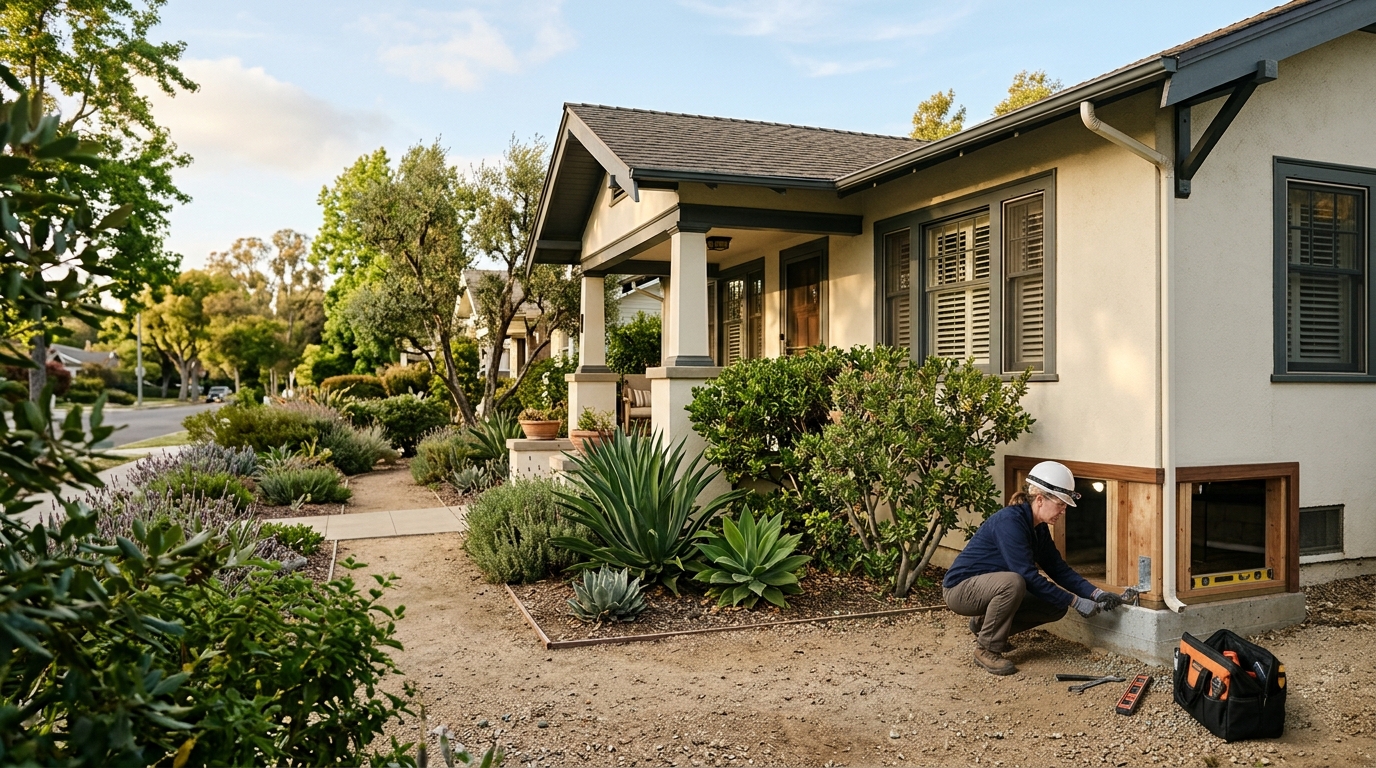
Earthquakes are an unavoidable part of owning property in California, but the amount of damage a house suffers is not determined by location alone. Older homes can have structural weaknesses that make them more likely to slide, shift, or partially collapse during strong ground shaking, particularly when the wood framing is not adequately connected to the foundation.
California’s Earthquake Brace + Bolt program, commonly called EBB, was created to help address one of the most common vulnerabilities found in older houses. Eligible property owners may receive a grant of up to $3,000 toward a qualifying seismic retrofit that strengthens the connection between the home and its foundation.
The program is especially relevant for older wood-frame homes with raised foundations and vulnerable crawl spaces. However, receiving a grant is not automatic. Registration is offered during specific enrollment periods, properties must meet program requirements, and approved work must follow applicable retrofit standards.
If you own an older California home, understanding the program before registration opens can help you determine whether your property may qualify and prepare for the cost of strengthening it. You can also browse our California homeowner directory when researching licensed contractors, structural professionals, and other local home services.
How the California Earthquake Brace + Bolt Program Works
Earthquake Brace + Bolt is administered through the California Residential Mitigation Program, a partnership involving the California Earthquake Authority and the California Governor’s Office of Emergency Services. The program focuses on reducing structural damage before an earthquake occurs rather than paying to repair damage afterward.
California says houses with inadequate foundation anchoring and cripple-wall bracing can be particularly vulnerable during an earthquake. Strong horizontal movement can cause a house to shift relative to its foundation. In serious cases, the structure can partially slide or topple from the foundation, resulting in major structural damage and potentially making the home unsafe to occupy.
What a brace-and-bolt retrofit actually does
A typical retrofit addresses the vulnerable area between a home’s wood framing and its foundation. The exact work depends on the construction of the house, but the two concepts behind the program are reflected directly in the name: bracing and bolting.
Bolting generally involves installing approved anchor bolts or other foundation-connection hardware to create a stronger attachment between the wood sill plate and the concrete foundation. Bracing generally involves strengthening short wood-framed walls in the crawl space, known as cripple walls, with structural plywood or another approved system.
Bolting helps keep the house connected to its foundation
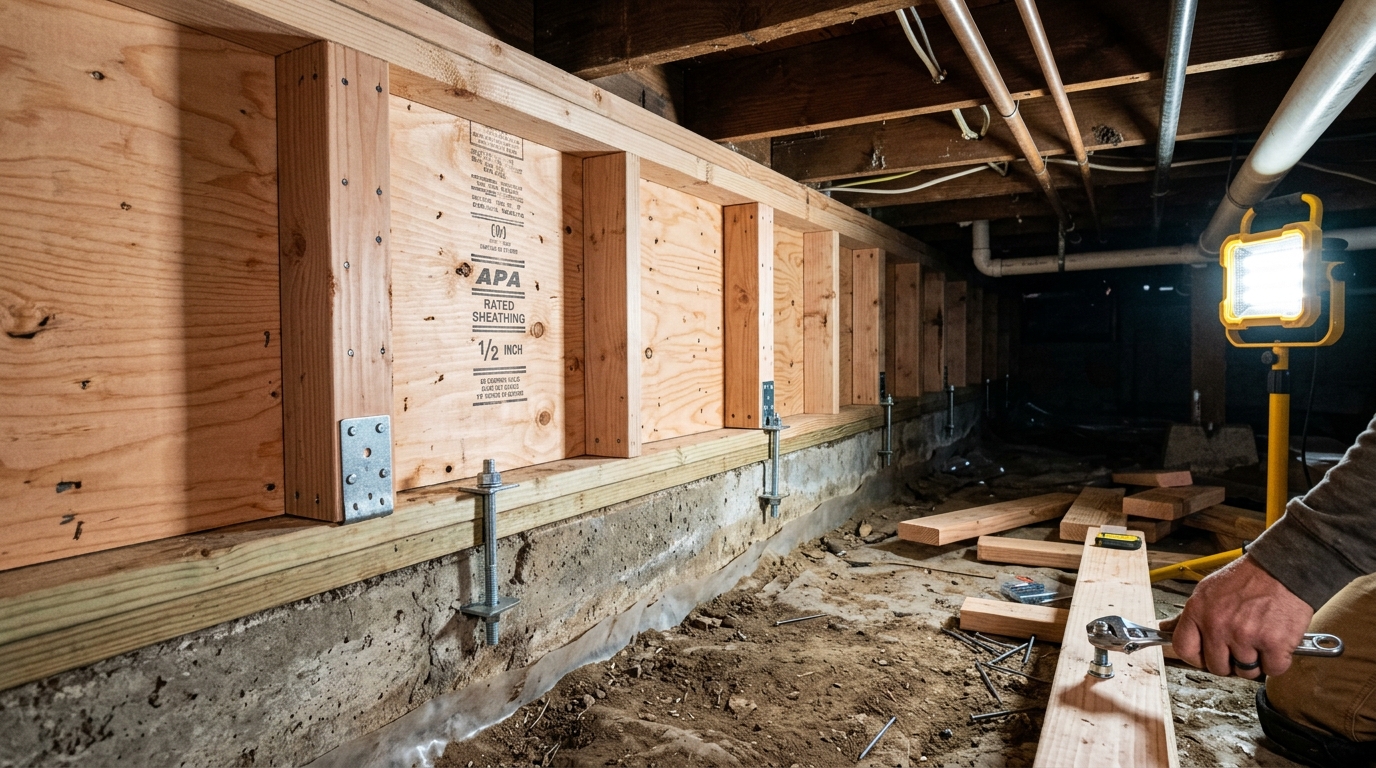
Many older California houses were constructed before modern seismic requirements became standard. Some were built without adequate anchor bolts connecting the house to the foundation. During severe shaking, that weak connection can allow the home to move independently from the foundation beneath it.
A properly designed retrofit adds connections intended to transfer earthquake forces more effectively through the structure. This does not make a house earthquake-proof, and it cannot prevent all types of earthquake damage. The objective is to address specific known weaknesses that can lead to disproportionately severe structural damage.
Homeowners should avoid assuming that every older house can use the same retrofit plan. Hillside houses, homes with unusual foundations, living space above garages, significant deterioration, or other structural conditions may require evaluation by an engineer or another qualified professional.
Cripple-wall bracing strengthens vulnerable crawl spaces
A cripple wall is a short wood-framed wall between the concrete foundation and the main floor framing of some raised-foundation houses. When these walls are inadequately braced, strong sideways movement can cause them to deform or collapse.
Adding properly installed structural sheathing can help strengthen the walls and create a more reliable path for earthquake forces. In many qualifying EBB projects, the combination of foundation bolting and cripple-wall bracing is what provides the primary seismic improvement.
The work should follow approved plans and California building standards. Simply adding plywood or hardware without understanding fastening patterns, existing framing, foundation condition, and applicable code requirements is not equivalent to a compliant seismic retrofit.
Who may qualify for the $3,000 grant
Current California guidance describes EBB as providing grants of up to $3,000 for qualifying seismic retrofits. Historically, the program has concentrated on older wood-frame homes in eligible higher-risk ZIP codes, particularly properties with raised foundations that lack adequate foundation bolting or cripple-wall bracing.
Exact eligibility can change between registration periods. For example, the 2025 application cycle expanded eligibility to certain rental and other non-owner-occupied properties. Homeowners should therefore check the rules for the specific registration period rather than relying on requirements from a previous year.
Registration is not permanently open
One important detail is that EBB does not operate like a year-round rebate that homeowners can claim at any time. California’s current 2026 information directs homeowners to complete the qualification questionnaire when registration opens.
That means homeowners considering a retrofit should check the official program status before beginning work if they hope to receive grant funding. Starting construction independently does not guarantee that an existing project can later be enrolled in the program.
Visit the official California earthquake retrofit and preparedness resource for current information about EBB and upcoming registration opportunities.
Even if registration is temporarily closed, homeowners can use the time to inspect their foundation, gather property information, research contractors, and estimate the cost of a retrofit. That preparation can make it easier to act when another enrollment period becomes available.
How California Homeowners Should Plan an Earthquake Retrofit
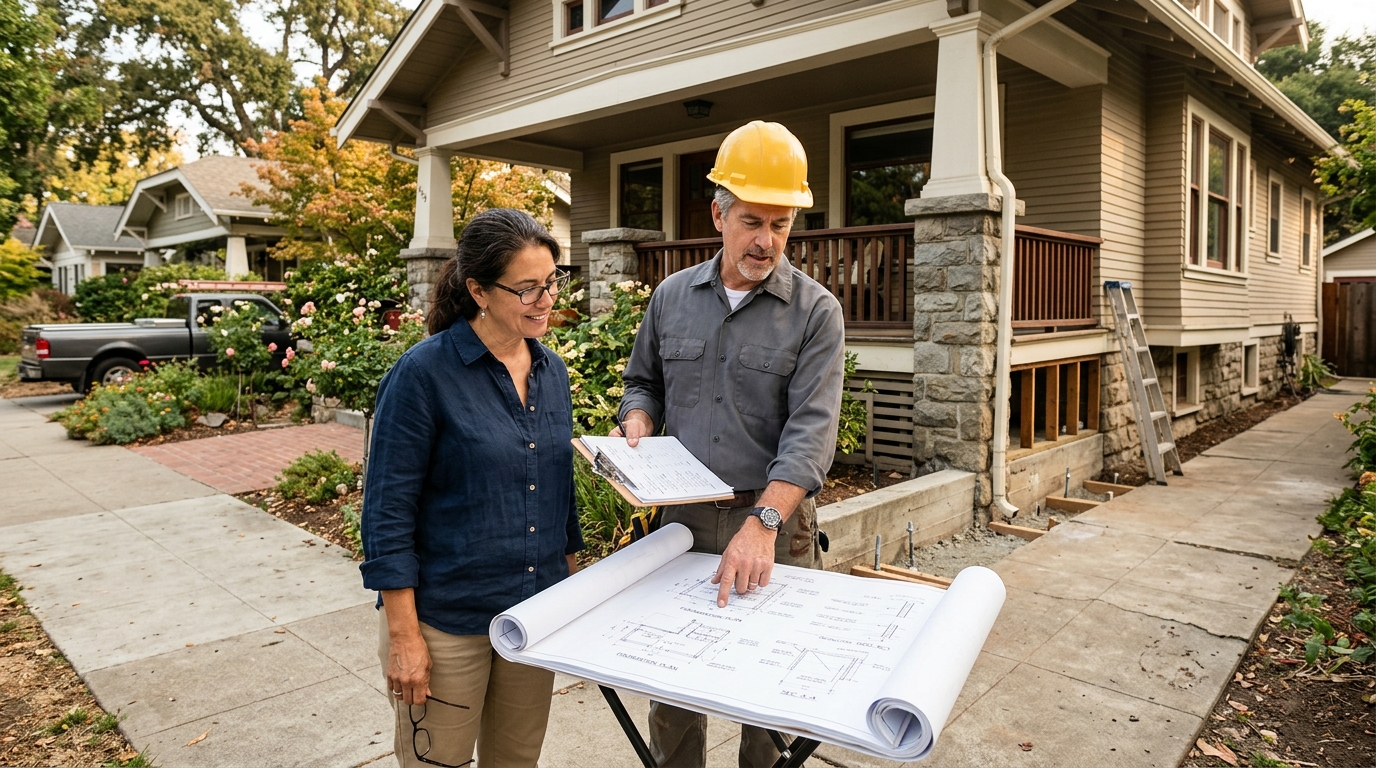
A $3,000 grant can reduce the cost of seismic work, but homeowners should think beyond the grant amount. The actual cost of a retrofit varies according to the size and height of cripple walls, foundation condition, accessibility, labor costs, structural repairs, permit requirements, and the amount of work required.
California notes that damaged or deteriorated framing and foundation problems can increase the cost. If rot, termite damage, cracking, or other structural deficiencies are discovered, those conditions may need to be addressed before or during the seismic project.
Evaluate the house, contractor, insurance, and documentation together
Start by determining whether your house has a raised foundation and accessible crawl space. If you are unsure, a qualified professional can inspect the property and identify the foundation type, existing anchor bolts, cripple walls, and other structural conditions.
If your home has living space over a garage, sits on a hillside, uses a post-and-pier foundation, or has unusual structural characteristics, a standard brace-and-bolt solution may not address its most important weaknesses. These conditions can require engineering and a different retrofit approach.
Get more than one estimate whenever possible. Ask contractors to clearly identify the work included, permits, engineering if needed, structural hardware, sheathing, foundation repairs, inspection requirements, and any work that is outside the grant-funded scope.
Before hiring anyone, verify licensing and insurance and understand whether the contractor satisfies any requirements imposed by the grant program. Our home services directory can help organize your research, but homeowners should independently confirm credentials before signing a construction contract.
A retrofit may also lower earthquake insurance costs
The benefits of seismic strengthening can extend beyond reducing potential physical damage. The California Earthquake Authority offers premium discounts for some older houses that have been properly retrofitted and verified.
CEA currently states that qualifying single-family homeowners may receive discounts of up to 25% depending on factors such as the age of the house and foundation type. A licensed contractor or structural engineer may need to verify that the work meets applicable standards before the insurance discount is applied.
This makes documentation particularly important. Save permits, final inspection records, invoices, photographs, contractor details, structural plans, product information, and any retrofit verification number issued through the EBB program. Ask your earthquake insurer exactly what documentation is required to receive a hazard-reduction discount.
Do not confuse homeowners insurance with earthquake insurance. A standard homeowners policy generally does not cover the structural damage caused directly by earthquake shaking. Homeowners considering their overall risk should review our California home insurance guide for 2026 and discuss earthquake coverage separately with a licensed insurance professional.
Earthquake preparation should also be coordinated with other major property projects. If you are considering a California ADU, foundation work, large remodel, electrical project, or energy upgrade, ask whether combining or sequencing the work could prevent unnecessary demolition later. Our California home energy rebates guide covers another category of incentives homeowners may want to evaluate while planning improvements.
documented improvements
Homeowners considering a move should also consider how documented improvements affect the property’s overall condition and buyer confidence. In a selective market, maintenance records and permitted upgrades can help buyers understand what has already been completed. See our California housing market 2026 guide for current statewide selling conditions.
A seismic retrofit cannot guarantee that a house will escape damage during a major earthquake. Ground conditions, earthquake intensity, structural configuration, chimneys, utilities, contents, and surrounding hazards can all affect losses. Brace-and-bolt work targets specific vulnerabilities rather than eliminating every possible earthquake hazard.
Homeowners should therefore combine structural improvements with broader preparedness. Secure tall furniture and water heaters, know how to shut off utilities when appropriate, maintain emergency supplies, create a household communication plan, and enable California earthquake alerts on compatible smartphones.
For owners of older raised-foundation houses, the Earthquake Brace + Bolt program can make an important safety improvement more affordable. The available grant is currently described by California as up to $3,000, and qualifying retrofits may also lead to earthquake-insurance savings. The key is to prepare before registration opens, verify eligibility, follow program requirements, and ensure the retrofit is completed to recognized standards.
For additional maintenance, renovation, insurance, and real estate resources, explore our California homeowner articles or use our Directory to research local home professionals.